Rich Library
38,000+
Photoreal Chaos Cosmos assets and materials for your digital twins

Chaos LunaSynthetic data for vision models
Send us photos, video, CAD files or a short brief, or simply tell us what you need. Luna will automatically build a physically accurate digital twin from it. Our 3D team inspects and adds expertise and finishing touches where necessary.
We're open for pilots with teams training vision, diffusion and VLA models.
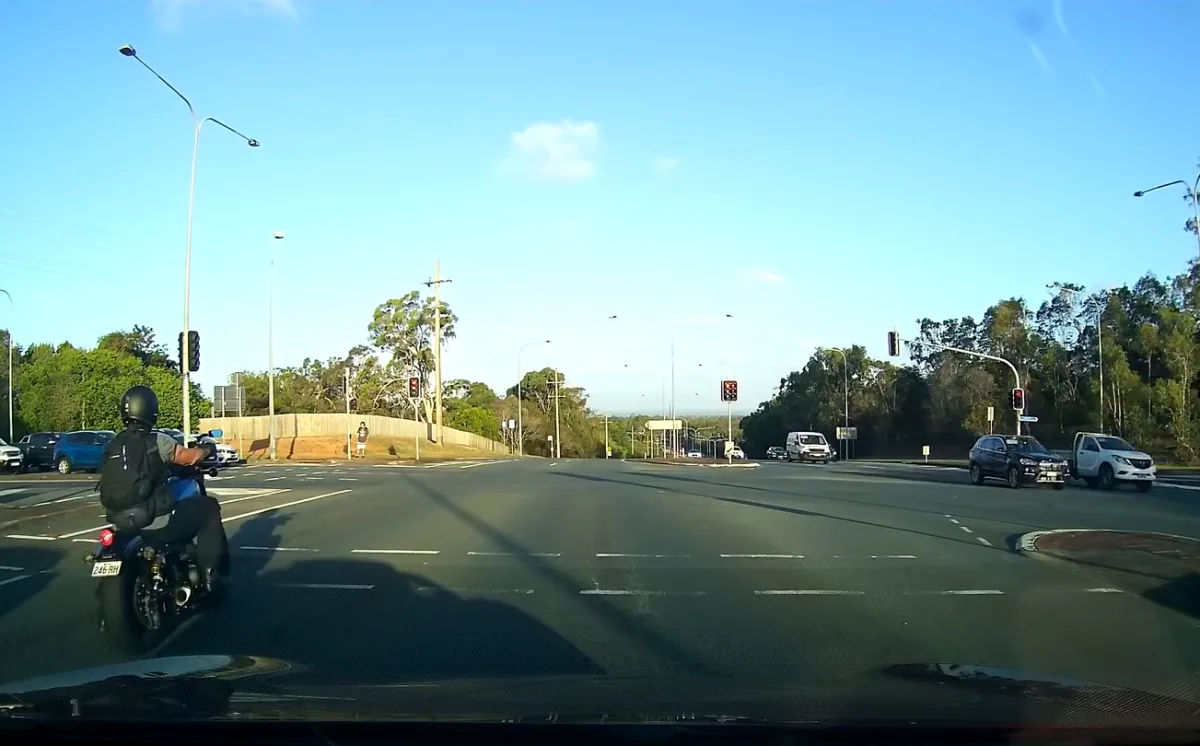
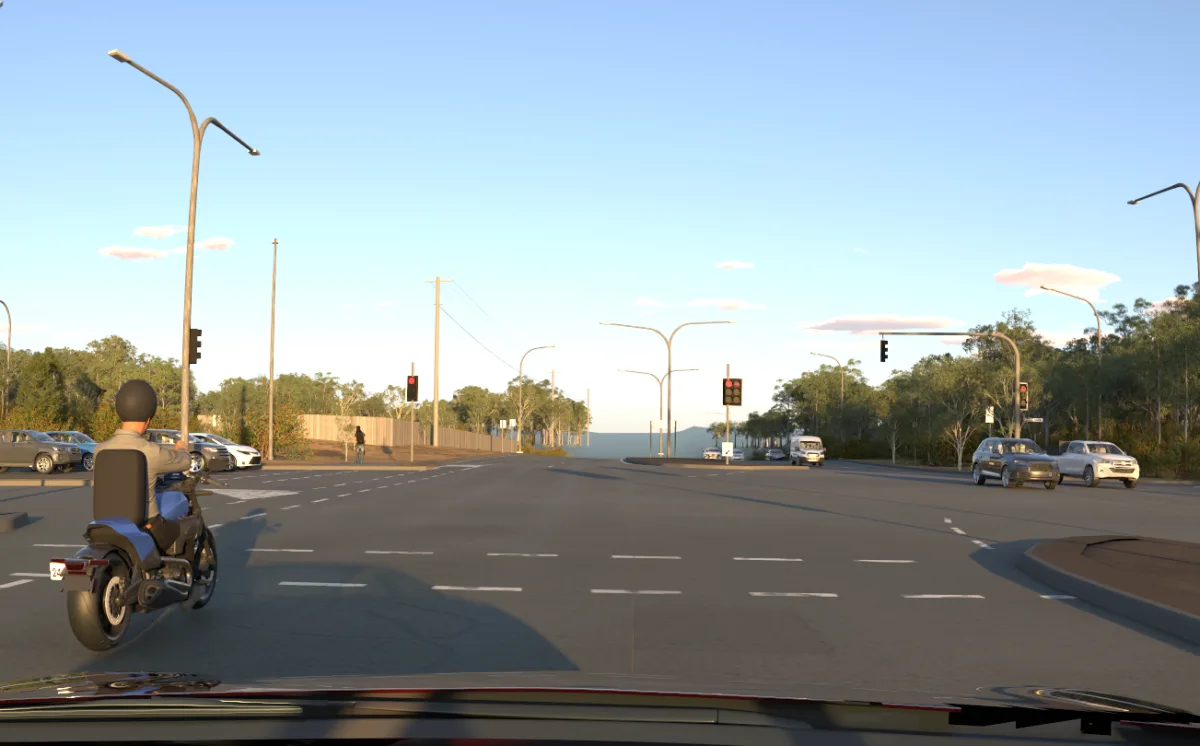
Photoreal Chaos Cosmos assets and materials for your digital twins
Engineers and researchers across R&D and AI/ML
Simulating light, optics and material physics

Award-winning rendering technology
Chaos has been honored with both an Academy Award® and an Engineering Emmy® for its role in the widespread adoption of ray-traced rendering in motion pictures and television.Build hard-to-capture scenarios, generate labels automatically and keep each variation consistent.
Vary lighting, objects and camera positions. Introduce defects and interactions. Generate the rare scenarios your model needs to learn.
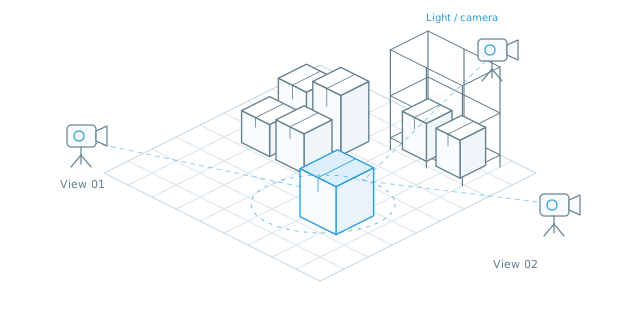
Generate people, environments and movement inside the twin, with complete legal control over every detail in the dataset.
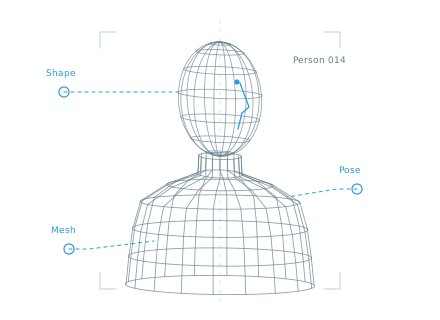
Export boxes, masks and metrics directly from scene geometry, aligned with the rendered output. Correct by construction.
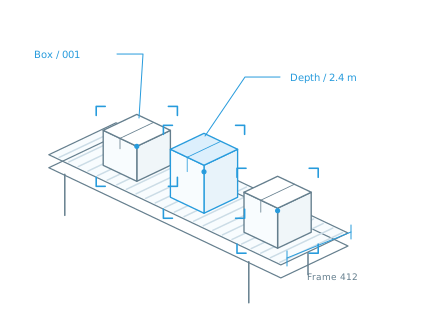
A shared scene graph keeps labels and object identities aligned across variations and exports.
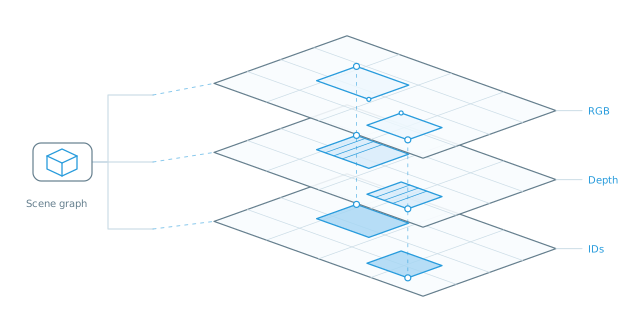
A digital twin is a working copy of your environment: real geometry, measured materials, simulated physics and a real camera model. It produces training images with exact labels on every frame.
The robot arm, conveyor and cartons move under simulated physics. Choose a pass to see the ground truth generated with every frame.
Also in every render: surface normals, optical flow and motion vectors, generated from scene geometry and movement.
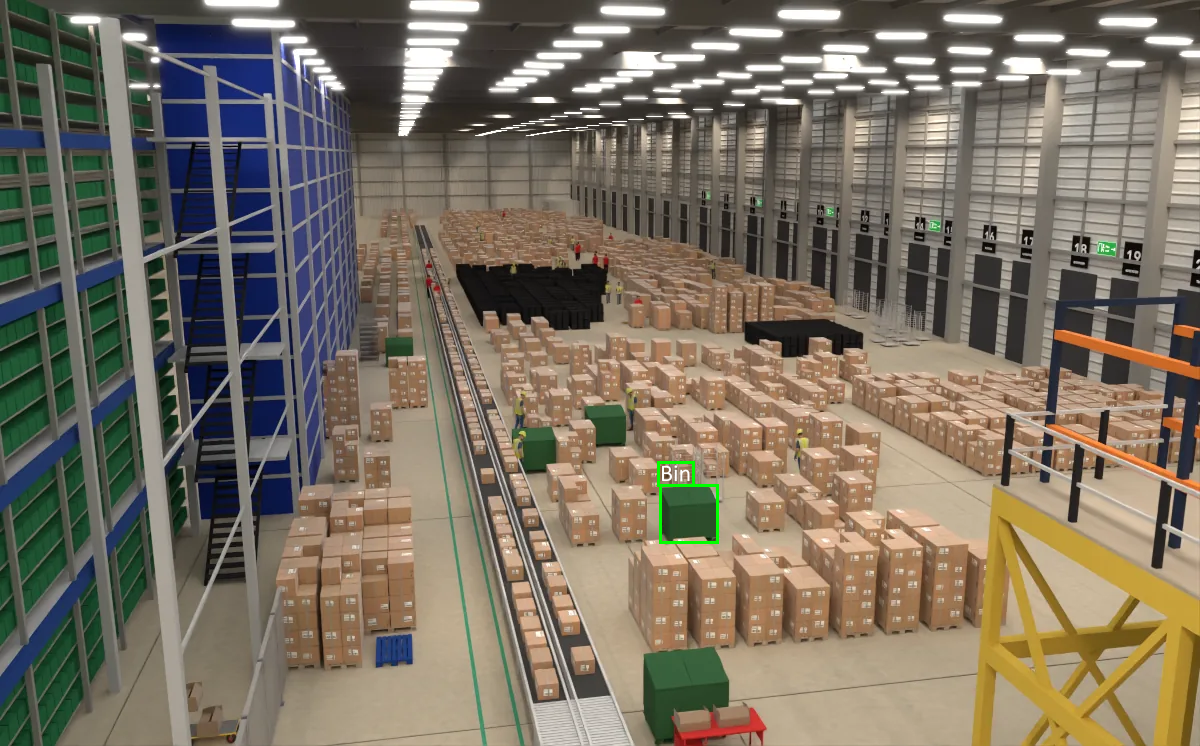
Photorealistic RGB with bounding boxes for every object.
Change light, atmosphere and camera in the twin and re-render. Every variation keeps its labels.
27 combinations
3 controls. 3 choices each.
Real runs also vary materials, objects, physics and more.
Luna runs on Chaos products that are already in production.
Physically based light transport
Materials measured from real surfaces
Render-ready assets for scene diversity
Rigid-body simulation: collisions, falling and stacked objects, moving machinery
Fire, smoke and fluids
Crowds, pedestrians and vehicles
Real-time ray tracing for high-volume generation
Distributed cloud rendering, in production today
10,000 or 10 million images, at lower cost in one ecosystem
Meet the team building Luna.
Fill out the form and the team will get back to you.
Loading content that can be large paragaph of text, or not. Sometimes it's a consent text, sometimes it's a legal disclaimer, but most forms have some kind of prelude to the submit button...
The more, the better. It really depends on the use case and on how much you can share.
The level of detail depends on your task. We focus on geometry, materials, light, camera and motion, then measure how the data performs when you train your model.
In case you have any specific requirements about parts of the digital twin that should be especially accurate, let us know in advance.
Images, panoramas, video or Gaussian splats, each with its label passes, in the format your pipeline uses. We can also deliver motion and sensor data in tabular format.
We can deliver custom data formats on request.
Once the project is complete and the dataset is produced, you own it completely.
Depending on availability, from a few days to a few weeks.
Luna is currently not generally available via an API. Tell us more about your use case and we can find a way to make it work.